
Chronic pain rehabilitation.
Movement as medicine.
If you've been living with pain for more than three months, you're not alone — and the answer is rarely more rest. Andrew Lai's chronic pain practice combines evidence-based exercise with a biopsychosocial approach to help you move, function, and live with confidence again.
Book with AndrewChronic Pain isn't just physical — biopsychosocial rehabilitation in Five Dock
Chronic pain — pain persisting beyond three months — is one of the most misunderstood health conditions in Australia. It's experienced by 1 in 5 adults, but treatment is often fragmented, opioid-heavy, or limited to passive interventions like manual therapy and rest. The evidence is clear: structured movement and active rehabilitation are among the most effective long-term strategies.
But here's the catch — for many people in chronic pain, exercise feels impossible. Movement hurts. Hurting feels dangerous. Avoidance becomes the norm. Over time, fear of movement becomes its own problem, layered on top of the original pain. This is where exercise physiology with a chronic pain focus genuinely changes things.
Four principles guiding chronic pain rehabilitation.
Andrew's practice is built around evidence-based principles drawn from modern pain science, the biopsychosocial model, and contemporary chronic pain rehabilitation research.
Understanding what pain is — and isn't — is the foundation. We spend time helping you understand your nervous system, the difference between hurt and harm, and why movement is safe even when it doesn't feel that way.
We don't push through pain. We don't avoid it either. We carefully graduate exposure to movement that the brain has come to associate with threat — rebuilding confidence one step at a time.
Pain is influenced by sleep, stress, mood, beliefs, and social factors — not just tissue. Treatment addresses the whole picture, not just the painful body part.
The goal isn't to keep you coming back forever. It's to rebuild your confidence so you can manage your pain independently — through movement, knowledge, and self-efficacy.
Andrew Lai — Chronic Pain Exercise Physiologist.
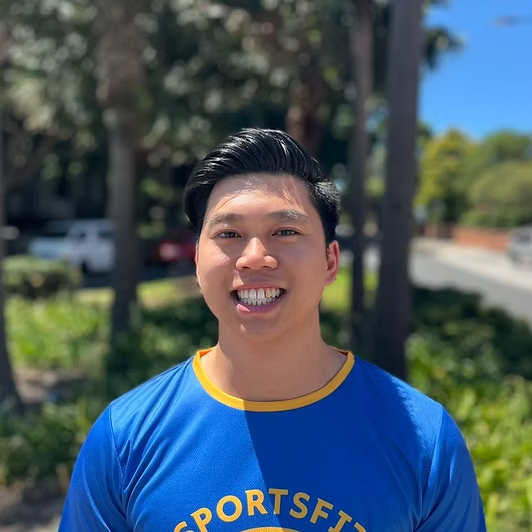
Andrew completed his Master of Exercise Physiology at the University of Sydney in 2021. His clinical practice focuses on people whose lives have been disrupted by persistent pain — from low back pain that won't resolve, to whole-body chronic pain syndromes, to the layered chronic pain that often follows long-term WorkCover or compensation claims.
Outside the clinic, Andrew is personally active across powerlifting, jogging, volleyball, and bouldering — which informs his belief that movement, in its many forms, is one of the most powerful tools we have for living well.
📎 Andrew maintains a dedicated chronic pain practice website with additional resources at andrewlaiep.com
Multiple ways to access chronic pain rehabilitation.
Chronic pain treatment with Andrew can be accessed through several funding routes:
Medicare CDM — if your GP has placed you on a Chronic Disease Management Plan and indicated Exercise Physiology, your sessions are partially rebated through Medicare.
NDIS — for plan-managed and self-managed participants whose chronic pain forms part of their disability or related condition.
WorkCover — chronic pain claims following a workplace injury are commonly funded through your insurer at WorkCover gazetted rates.
Private Health — most private health funds with extras cover provide rebates for Exercise Physiology sessions. We process claims via HICAPS.
Self-Funded — if you don't have or qualify for any of the above, you can still book — chronic pain rehabilitation is one of the most evidence-supported interventions available.
Book with Andrew Have Questions? Contact Us